
Learn about weather and climate
Start with a question. Come back with a new way of seeing.
Good questions to start with
Open a question to read a short answer.
What’s the difference between weather and climate?
Weather is what the atmosphere is doing over short periods: today’s rain, wind or warmth. Climate describes patterns over many years. A single hot afternoon tells us about weather; long-term temperature patterns help us understand climate.
Why measure weather in your own neighborhood?
Trees, buildings, surfaces and nearby water can influence local conditions. Consistent observations help you compare places and ask useful questions. Keep measurement methods and times consistent.
How do I start a weather journal?
Choose a safe observation spot. Record the date, time, clouds and available measurements each day. Write one question. After two weeks, look for patterns and share what you learned with an adult or class.
Start a weather journal
A weather journal is a simple way to practice being a scientist. Here’s how to begin.
- Pick a safe spot with an adultSomewhere you can look at the sky and, if you have them, read a thermometer or rain gauge.
- Write down what you noticeRecord the date, time, clouds, wind and any measurements available to you.
- Add a drawing or a reflectionHow did the weather feel? What were you doing outside? What surprised you?
- Compare after two weeksLook back for patterns, write one question, and share what you found.
See a real weather journal
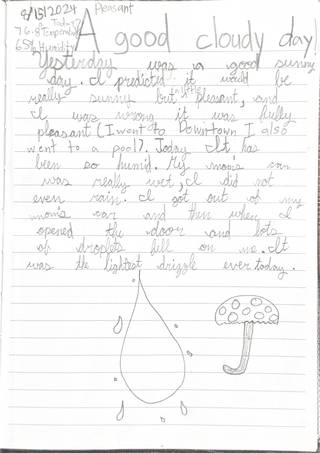
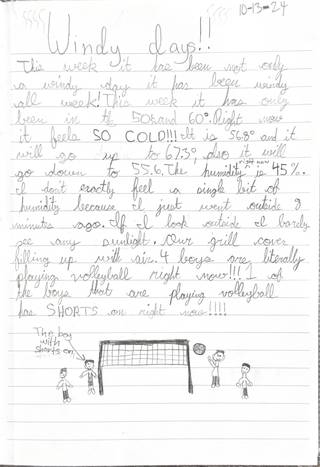
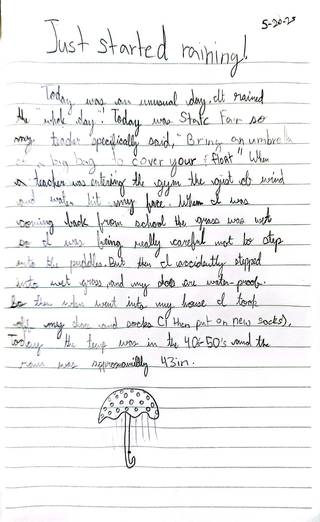
Ishika kept a weekly weather journal with dates, temperatures, titles and drawings. On her explorer page you can read every page and, for pages from August 2024 to February 2025, compare what she wrote with what her backyard station measured that week.
Reading the explorer charts
The charts on the explorer pages show one value per day, worked out from the readings a station took every five minutes.
- High and low are the warmest and coldest readings of the day. The shaded band between them shows how much the temperature changed.
- Average is all of the day’s readings added together and divided by how many there were.
- Rain is how much water the station’s rain collector caught that day, in inches.
- Gaps mean the station didn’t record enough readings that day to give a fair summary.